Au-delà du tableau blanc : libérer la collaboration grâce aux tableaux interactifs Leave a comment
Remember the days of dusty chalkboards and dry-erase markers, where brainstorming often involved someone scribbling furiously while others strained to see? Those days are rapidly becoming a relic of the past, thanks to the advent of interactive boards. More than just a fancy screen, interactive boards are revolutionizing how we learn, collaborate, and present, transforming passive viewing into active participation.
What Exactly is an Interactive Board?
At its core, an interactive board is a large display screen that allows users to interact with digital content directly on its surface. Think of it as a giant tablet or touchscreen monitor, often integrated with a computer and specialized software. These boards come in various forms, including interactive whiteboards (IWB) that connect to projectors and interactive flat panel displays (IFPD) which are self-contained LED screens.
Key Features and What Makes Them So Powerful:
Interactive boards boast a suite of features designed to enhance engagement and productivity:
- Touch Interactivity: This is the hallmark feature. Users can write, draw, drag, drop, and manipulate content using their fingers, a stylus, or even multiple users simultaneously. This hands-on approach makes learning and brainstorming far more dynamic.
- Annotation and Mark-up: Forget taking separate notes! Presenters and participants can directly annotate over presentations, documents, images, and videos in real-time. These annotations can then be saved and shared, ensuring everyone has access to the collaborative input.
- Built-in Software and Apps: Most interactive boards come with intuitive software that offers a range of tools, from digital whiteboarding functions and shape recognition to web browsers and file management. Many also support popular third-party applications.
- Connectivity: With extensive connectivity options (USB, HDMI, Wi-Fi, Bluetooth), interactive boards seamlessly integrate with other devices. You can easily display content from laptops, tablets, smartphones, and even cloud storage.
- Screen Sharing and Mirroring: Participants can wirelessly share their device screens to the interactive board, making presentations and collaborative editing incredibly fluid. This is particularly useful in hybrid meeting environments.
- High-Resolution Display: Modern interactive boards offer stunning visuals with 4K resolution, ensuring clarity and vibrant colors for all types of content.
Transforming Classrooms and Boardrooms:
The impact of interactive boards is being felt across various sectors:
- Education: In classrooms, interactive boards foster engaging lessons, allowing teachers to incorporate multimedia, conduct interactive quizzes, and facilitate group activities. Students can come up to the board to solve problems, present projects, and even participate in virtual field trips.
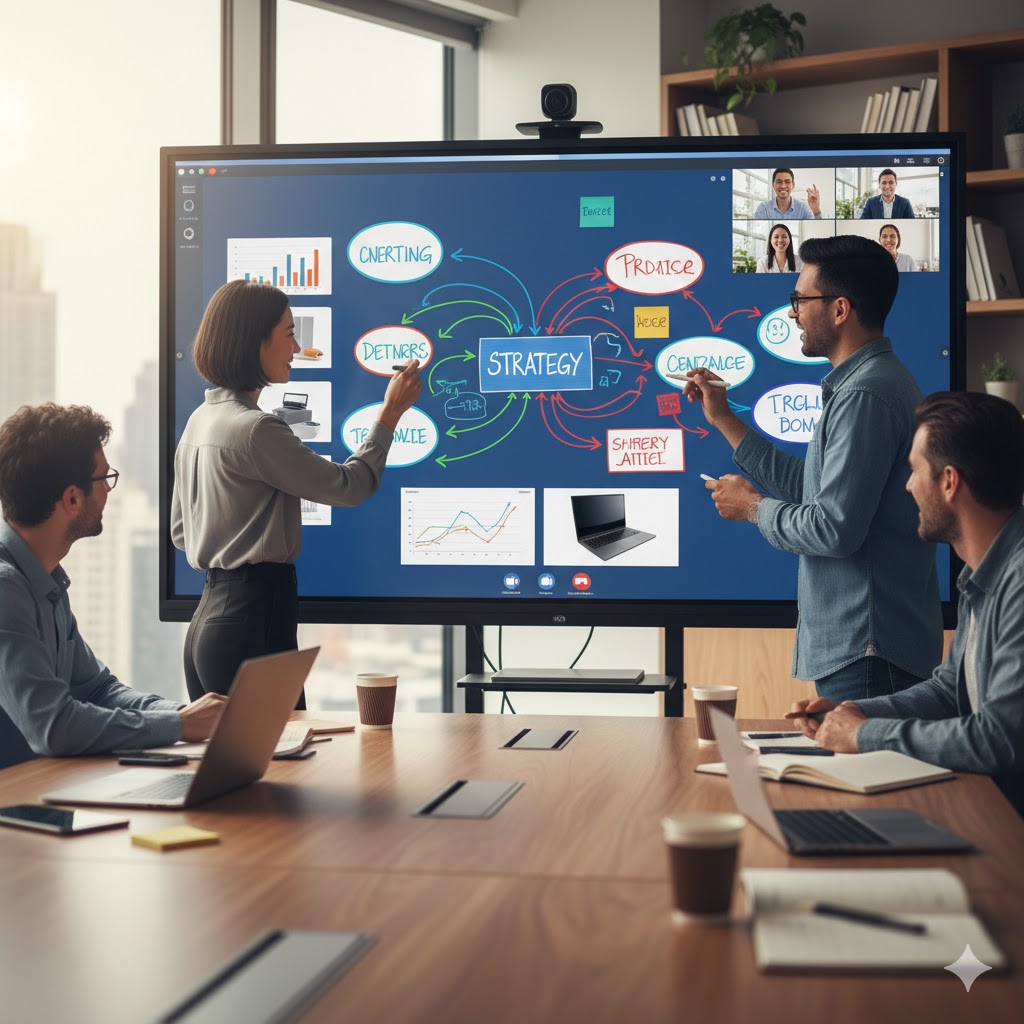
- Business: In the corporate world, interactive boards are a game-changer for meetings, presentations, and training sessions. They enable dynamic brainstorming, real-time feedback on documents, and more engaging client presentations. Hybrid teams can collaborate effectively, with remote participants interacting with the same content as those in the room.
- Training and Development: From product demonstrations to skill-building workshops, interactive boards provide an immersive platform for trainers to deliver content and for participants to practice and apply new knowledge.
The Future is Interactive:
As technology continues to evolve, interactive boards are becoming even more sophisticated, integrating features like AI, advanced analytics, and even more seamless cloud integration. They are no longer just a luxury but a crucial tool for fostering creativity, enhancing communication, and driving productivity in our increasingly digital world.
Here’s a visual of an interactive board in action, illustrating its collaborative potential: